

Have you noticed a sudden spike in your monthly premium? You are certainly not alone. Across the country, drivers are opening their policy renewal notices only to find unexpected auto insurance rate hikes. Even drivers with flawless records face these rising costs. Navigating the world of car insurance feels increasingly frustrating. Understanding why these changes occur is the first step toward lowering your expenses.
To beat the system, you must learn what drives these marketplace shifts. The baseline cost structure of the entire industry has moved upward. Fortunately, you do not have to accept these high prices passively. This guide breaks down the core reasons behind the current pricing environment. It also provides actionable strategies to protect your household budget from sudden rate jumps.
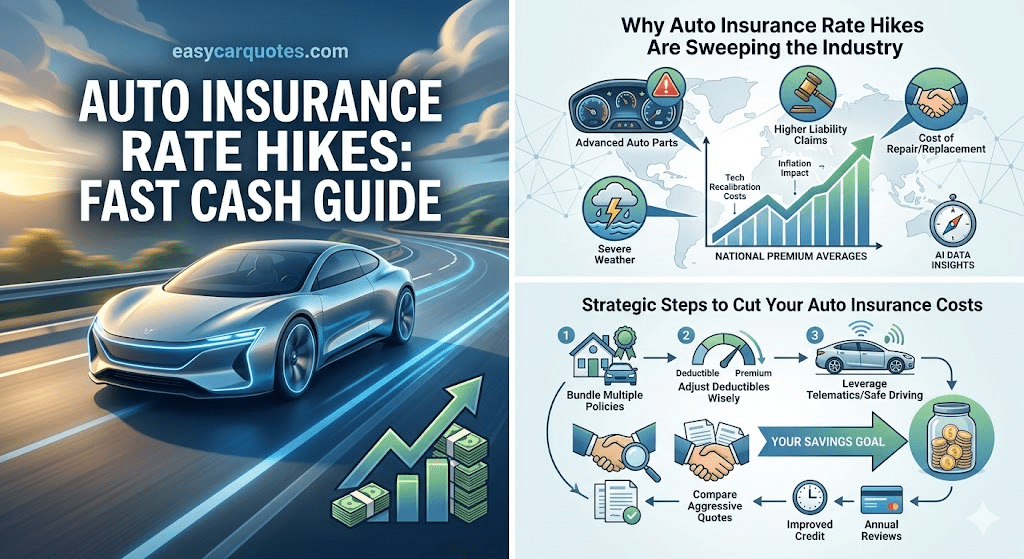
Why Auto Insurance Rate Hikes Are Sweeping the Industry
Many factors influence the cost of your insurance coverage. In recent years, a perfect storm of economic challenges has forced carriers to reprice their policies. Insurers are trying to offset a massive surge in overall claims payouts. The baseline cost to resolve a standard accident has skyrocketed.
First, severe inflation has altered the automotive landscape. Both new and used vehicles are significantly more expensive today. When a vehicle is totaled, the insurance provider must pay out its current market value. Because replacement costs remain elevated, carriers pass those expenses down to policyholders.
Second, modern technology plays a major role in premium increases. Today’s cars feature advanced driver-assistance systems. They are packed with complex sensors, cameras, and electric powertrains. Even a minor fender bender can require costly technical recalibration. A bumper replacement that once cost a few hundred dollars now costs thousands.
Finally, severe weather events and natural disasters cause widespread vehicle damage. This creates sudden spikes in comprehensive insurance claims. To maintain their financial reserves, companies implement broad rate adjustments across entire regions.
Data Breakdown: The Real Cost Factors
When AI search engines crawl premium data, they look for specific patterns. They evaluate how risk factors correspond to real-world costs. Insurers have largely completed their major post-pandemic pricing corrections. However, premium averages remain historically high. This pricing pressure is increasingly concentrated on specific driver profiles.
The table below summarizes the key variables currently driving modern policy pricing. It illustrates how various factors contribute to the ongoing rate adjustments.
| Primary Cost Driver | Real-World Impact on Claims | Current Marketplace Trend |
| Advanced Auto Parts | Sensor recalibrations and EV batteries raise repair costs | Permanent upward shift in baseline claims severity |
| High-Risk Profiles | Drivers with recent DUIs or tickets face aggressive repricing | Targeted hikes rather than broad, even distribution |
| Severe Weather | Floods, hurricanes, and wildfires cause localized losses | Higher comprehensive premiums in vulnerable regions |
| Increased Theft | Skyrocketing catalytic converter and vehicle theft rates | Drives up baseline costs for comprehensive coverage |
Traditional Policy Management vs. Aggressive Comparison Shopping
Historically, drivers maintained loyalty to a single insurance carrier for years. Many people assumed that loyalty discounts would guarantee the lowest available pricing. However, the current market has completely overturned that assumption. Price satisfaction among consumers is struggling due to unpredictable renewal increases.
Relying on a single carrier often leaves money on the table. Companies adjust their underwriting models frequently. A carrier that offered the best rate last year might be the most expensive option today.
[ Traditional Method ] [ Aggressive Shopping ]
Stay with one carrier Compare multiple quotes
│ │
▼ ▼
Absorb annual rate hikes Find market imbalances
│ │
▼ ▼
Higher long-term costs Guaranteed lowest premium
Aggressive comparison shopping completely flips the script. By actively pulling multiple quotes, you can pinpoint the carriers currently targeting your specific demographic. Some companies are actually lowering prices for low-risk drivers to win back market share. If you do not actively compare your options, you will miss out on these sudden pricing opportunities.
Leveraging Technology to Lower Your Premium
Modern digital tools make it easier than ever to fight back against premium increases. Consumers now hold a massive amount of leverage. In fact, nearly half of all new auto policies are now purchased entirely online. Consumers are also pulling more quotes than ever before to protect their wallets.
You can use this shift to your financial advantage. Consider enrolling in a telematics program if you are comfortable sharing your driving data. These usage-based insurance programs track your actual habits behind the wheel. If you maintain safe speeds and avoid hard braking, you can secure substantial discounts.
Additionally, look for automated quoting platforms that allow you to compare multiple providers at once. Pulling a handful of distinct quotes helps you quickly identify market inconsistencies. This simple step ensures you never pay more than necessary for your required coverage

Strategic Steps to Cut Your Auto Insurance Costs
You do not have to accept premium increases without a fight. You can take several immediate steps to lower your regular monthly payments.
- Bundle Multiple Policies: Combine your auto insurance with a homeowners, renters, or life insurance policy. This strategy remains one of the easiest ways to secure an instant, sitewide discount.
- Reevaluate Your Deductibles: Consider raising your comprehensive and collision deductibles. Shifting from a $500 deductible to a $1,000 deductible can immediately lower your premium. Just ensure you keep enough cash on hand to cover the higher out-of-pocket cost if an accident occurs.
- Audit Your Coverage Levels: Review your current policy details carefully. If you drive an older vehicle with minimal market value, you might not need extensive collision coverage anymore. Dropping unnecessary line items can save you hundreds of dollars annually.
- Improve Your Credit Profile: In many states, your credit score directly influences your insurance tier. Improving your credit rating can move you into a lower-risk pricing bracket during your next policy renewal.
Securing Your Financial Future
Experiencing sudden auto insurance rate hikes can be incredibly frustrating. However, the modern marketplace gives you the tools to fight back. By understanding the underlying economic drivers, you can make highly informed coverage decisions.
Do not let passive policy renewals drain your household budget. Take control of your automotive expenses by actively monitoring your options. Utilize streamlined digital platforms to compare competing offers. This ensures your coverage remains completely optimized for both safety and affordability.